
In contrast, the UK Parliament has acknowledged and is currently consulting on their widespread misuse.
The criticism, that they are used to protect the powerful, has grown in intensity and scope. As questions are being raised in the House of Lords and Commons about the integrity of lawyers who deploy them against people with fewer resources, the complacence of New Zealanders has been abruptly stirred.
Both countries are now on shared alert as Sir Rod Drury, co-founder of Xero — which enjoys a strong UK client base —faces allegations of inappropriate conduct toward younger female employees. The alleged behaviour was apparent during his tenure as CEO.
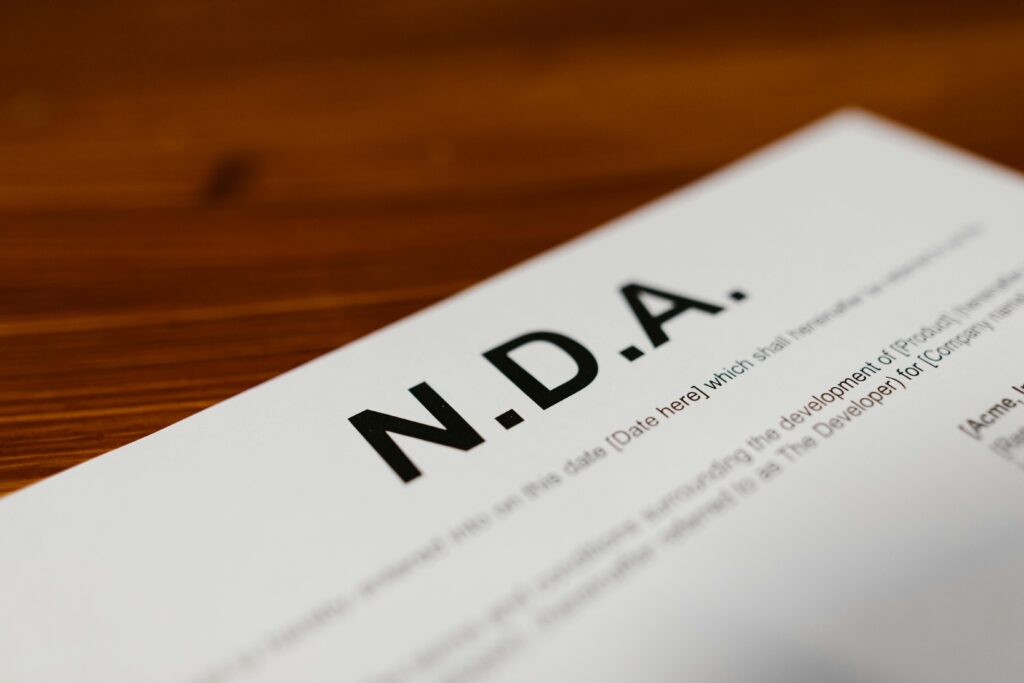
Sir Rod was made a knight of the realm in the 2026 New Year’s Honours. More recently he was named New Zealander of the Year – an award that he has since returned. In recent weeks, one of the accusers, Ally Naylor, has invited Sir Rod to publicly confirm that he will not pursue legal action against anyone who wishes to speak about their experience. It is believed by Naylor that at least two NDAs had been signed. Meanwhile the co-owner and publisher of a leading NZ business magazine is offering to underwrite the indemnity and legal costs for any victim bound by an NDA who chooses to come forward.
One challenges the powerful person. The other supports the vulnerable one. Both indicate a crisis in trust and confidence for how and when the law is applied.

In New Zealand’s health sector, NDAs have previously caused concern. In 2024, sixty-seven Health NZ staff signed non-disclosure agreements covering financial constraints within the organisation. There was political backlash. The agreements were lifted. The chief executive acknowledged that improvements could be made in how such agreements are managed. NDAs are also appearing in the education sector, preventing consultation on significant policy changes. The Law Society has clarified that NDAs cannot be used to cover up wrongdoing. These are important correctives. But they address institutional overreach — bureaucrats silencing other bureaucrats. Nobody is yet asking the harder question: what happens to a woman who signs an NDA at the end of a misconduct process that only ever sought to buy her silence?
Research published in May 2025 in Gender, Work and Organisation gives this a name. Kate Kenny and Maria Batishcheva introduce the concept of disclosure injustice — the finding that whistleblowing is not a universal experience. A woman’s testimony is assessed through a credibility lens that disadvantages her. The structural arrangements that are supposed to support people coming forward do not support everyone equally. Gender shapes both whether you are believed and whether the system is built to receive you. An NDA deployed at the end of that process is not a settlement. It is the final mechanism of disclosure injustice.
New Zealand’s own data makes the point without abstraction. The Institute of Business Ethics surveyed employees across multiple countries in 2021. In New Zealand, 41% of employees who raised concerns about misconduct they had witnessed reported experiencing retaliation. The speak-up rate, while above the global average, declined between 2018 and 2021. New Zealand organisations are below the global average for disciplining employees who violate ethical standards. The infrastructure exists — codes of conduct, ethics programmes, written standards. The consequence does not follow.
This is the gap between policy and culture. Policy says speak up. Culture says: do we really need to know?
At Xero, this discouragement is written into the code of conduct itself. Employees uncertain about speaking up are asked to consider: what impact might this have on Xero, our customers and our shareholders? Asking a potential whistleblower to weigh shareholder impact before deciding whether to report misconduct is not ambiguous guidance. It is a chilling effect dressed up as ethical process.
NDAs do not create silence from nothing. They enforce a silence that institutions are already inclined toward. In New Zealand, that inclination is reinforced by small networks, overlapping loyalties, and a founder mythology that surrounds figures like Sir Rod Drury with a protective halo. He did not merely build a company. He built a story about New Zealand — scrappy, innovative, punching above its weight. Questioning that story requires something most institutions prefer not to do. In the context of inappropriate behaviour, it is more comfortable to manage the junior employee than to examine the senior one.
Five weeks ago, New Zealand’s Chief Ombudsman updated its Guide to Whistleblowing and removed the statement advising people raising concerns to avoid emotional or speculative language, on the basis that a disclosure written in factual professional language is likely to be taken more seriously. That guidance had stood. It implied that truth and emotion are incompatible — that distress is evidence against credibility rather than evidence of harm. The concession was quietly made. No fanfare. The Guide was simply updated.
NDAs do not create silence from nothing. They enforce a silence that institutions are already inclined toward. In New Zealand, that inclination is reinforced by small networks, overlapping loyalties, and a founder mythology that surrounds figures like Sir Rod Drury with a protective halo. He did not merely build a company. He built a story about New Zealand — scrappy, innovative, punching above its weight. Questioning that story requires something most institutions prefer not to do. In the context of inappropriate behaviour, it is more comfortable to manage the junior employee than to examine the senior one.
Five weeks ago, New Zealand’s Chief Ombudsman updated its Guide to Whistleblowing and removed the statement advising people raising concerns to avoid emotional or speculative language, on the basis that a disclosure written in factual professional language is likely to be taken more seriously. That guidance had stood. It implied that truth and emotion are incompatible — that distress is evidence against credibility rather than evidence of harm. The concession was quietly made. No fanfare. The Guide was simply updated.

That is where New Zealand was. Adjusting its language.
Xero is not a distant New Zealand story for UK readers. It is embedded in the daily operations of British businesses, adapted for UK tax law, partnered with UK banks, active in that market since 2011. The conduct of its co-founder is now a live question. The governance of global companies does not stay neatly in the country of origin.
It is a mistake to assume that people who sign NDAs do so willingly. Frequently it is the only available exit point after months, sometimes years, of being worn down. Silence — purchased or pressured — represents the path of least resistance that the institution makes available. New Zealand has work to do in understanding why NDAs are becoming more common and who, precisely, they are protecting.
The legal reckoning underway in the UK needs to be tabled in New Zealand. Accountability for NDA misuse need not be confined to one jurisdiction when the threshold has been reached.